
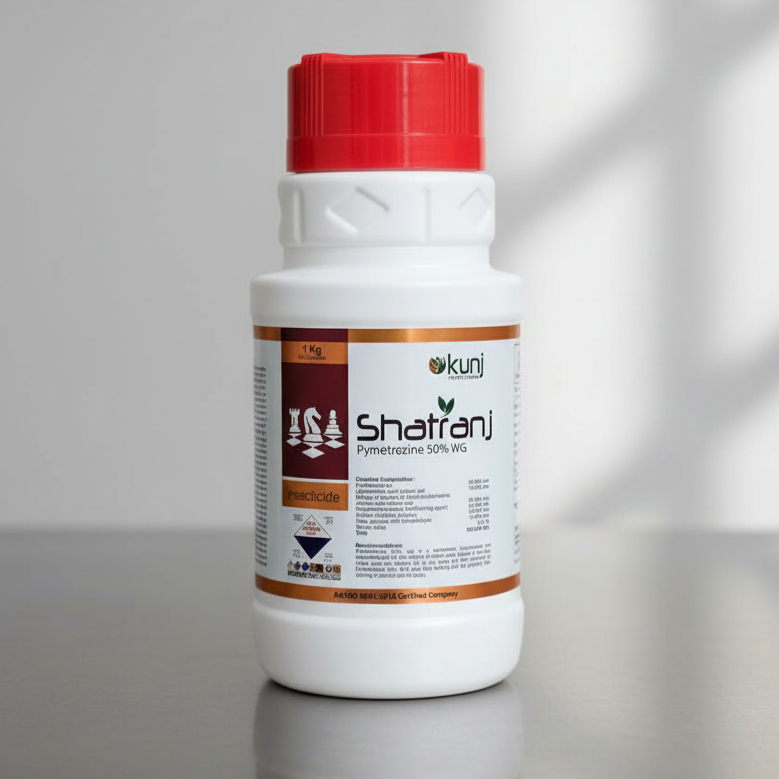
Shatranj
Pymetrozine 50% WG
Available Packing:
1kg, 500gm, 250gm
Pymetrozine 50% WG:
Pymetrozine 50% WG is a novel, highly selective systemic insecticide formulated as Water Dispersible Granules (WG).[1][2] Belonging to the pyridine azomethine chemical class, it is specifically designed to control sucking pests in crops like Rice, Vegetables, and Cotton. It is renowned for its unique "anti-feeding" property, which stops pests from feeding almost immediately upon exposure. Its granular formulation dissolves easily in water, ensuring uniform coverage and rapid absorption by the plant's foliage and roots for long-lasting protection.
Mode of Action:
Pymetrozine 50% WG functions through a unique neural inhibition mechanism:
Feeding Cessation: It acts on the nervous system of the pest, specifically targeting the chordotonal mechanoreceptors. Upon contact or ingestion, it causes an immediate "stylet paralysis."
Starvation: The pest withdraws its feeding tube (stylet) from the plant tissue and is unable to insert it again. Consequently, the insect stops feeding within minutes, leading to starvation and eventual death within a few days.
Systemic Activity: It has excellent translaminar (moves across the leaf) and systemic (moves within the plant) activity, protecting new growth and controlling pests hiding on the underside of leaves.
Primary Uses and Target Crops:
This insecticide is a top choice for managing difficult-to-control hopper complexes in rice and sucking pests in vegetables.
Key target crops include:
Cereals: Rice (Paddy)
Fiber Crops: Cotton
Vegetables: Tomato, Chili, Brinjal (Eggplant), Okra, Cabbage, Potato
Fruits: Mango, Citrus, Grapes
Others: Cucurbits
Application and Dosage:
Pymetrozine 50% WG is mixed with water and applied as a foliar spray.
The recommended dosage varies by crop:
Rice (Paddy): To control Brown Plant Hopper (BPH), Green Leaf Hopper (GLH), and White Backed Plant Hopper (WBPH), use 120 to 150 grams per acre.
Cotton: For Aphids and Whiteflies, use 120 to 150 grams per acre.
Vegetables (Tomato/Chili/Okra): To control Aphids and Whiteflies, use 120 to 150 grams per acre.
Mango: For Mango Hoppers, use 0.5 grams per liter of water (approx. 100–150g per acre depending on tree size).
General Mixing Rate: A common mixing rate is 0.3 to 0.5 grams per liter of water. Ensure thorough coverage of the plant canopy.
Target Pests:
This insecticide is highly specific to sap-sucking insects (Homoptera).
Commonly controlled pests include:
Brown Plant Hopper (BPH)
Green Leaf Hopper (GLH)
White Backed Plant Hopper (WBPH)
Aphids
Whiteflies
Jassids
Safety Precautions:
Strict adherence to safety precautions is essential. While it is relatively safe for beneficial insects, standard care is required.
Key safety recommendations include:
Personal Protective Equipment (PPE): Wear protective clothing, rubber gloves, boots, and a face mask during mixing and spraying.
Bee Safety: Although it has low toxicity to adult bees relative to other insecticides, avoid spraying directly on blooming crops when bees are actively foraging.
Handling Practices: Do not eat, drink, or smoke when using the product. Wash hands and exposed skin thoroughly with soap and water after use.
Environmental Safety: This product is toxic to aquatic life. Do not contaminate water bodies, ponds, or irrigation ditches.
Storage:
Store the product in its original container in a cool, dry, and well-ventilated place, away from direct sunlight, moisture, food, and animal feed. Keep out of reach of children and uninformed persons.