
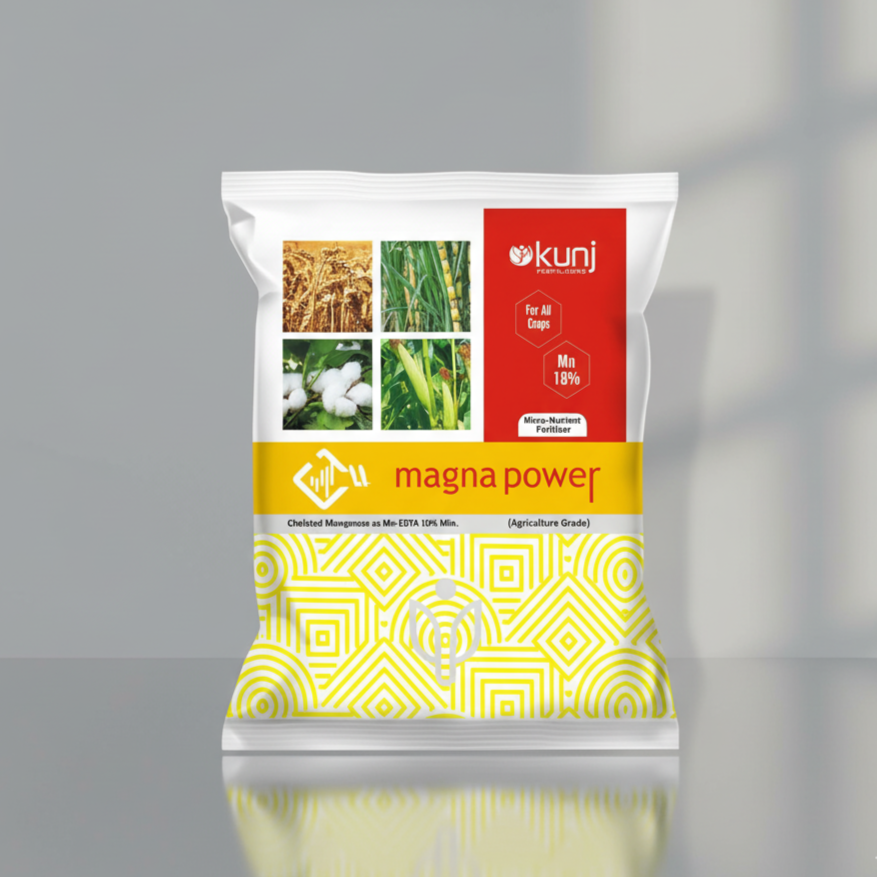
Magna Power
Chelated manganese as MN-EDTA 10% Min.
Available Packing:
1kg, 500gm, 250gm
Chelated manganese as MN-EDTA 10% Min.:
Chelated Manganese as Mn-EDTA 10% Min. is a highly efficient and readily available source of the essential micronutrient manganese for plants. It is a water-soluble microgranular or powder product where the manganese ion is protected by an EDTA (ethylenediaminetetraacetic acid) chelating agent. This chelation process prevents the manganese from being locked up or precipitated in the soil, ensuring it remains available for plant uptake over a wide range of pH levels.
Mode of Action:
As a micronutrient fertilizer, Mn-EDTA provides manganese, a vital element for plant growth and development. Manganese plays a crucial role in several key physiological processes within the plant:
Photosynthesis: It is an essential component of the water-splitting enzyme system in Photosystem II, which is fundamental to photosynthesis.
Enzyme Activation: Manganese activates numerous enzymes involved in metabolic processes, including respiration and nitrogen assimilation.
Chlorophyll Formation: It is directly involved in the synthesis of chlorophyll, the green pigment responsible for capturing light energy.
When applied, the Mn-EDTA chelate dissolves in water and is absorbed by the plant's roots or leaves. The EDTA chelate releases the manganese ion at the plant's surface, allowing it to be easily assimilated and transported to where it is needed, effectively correcting deficiencies.
Primary Uses and Target Crops:
Mn-EDTA is used to prevent and correct manganese deficiency in a wide variety of agricultural and horticultural crops. Manganese deficiency is more common in soils with high pH (alkaline), high organic matter content, or sandy soils where leaching is frequent.
Key target crops include:
Cereals: Wheat, Barley, Oats, and Maize
Oilseeds: Soybean, Canola, and Groundnut
Fruits: Citrus, Grapes, and deciduous fruit trees
Vegetables: Potatoes, Tomatoes, Onions, and leafy greens
Legumes: Peas and Beans
Application and Dosage:
Mn-EDTA is versatile and can be applied through various methods to suit different farming systems.
Foliar Application: This is the most common and efficient method for correcting deficiencies quickly. A general recommendation is to dissolve 0.5 to 1.0 gram of Mn-EDTA per liter of water and spray it on the leaves, ensuring thorough coverage.
Soil Application: It can be applied to the soil, either broadcast or as a band application. The typical dosage ranges from 3 to 10 kg per hectare, depending on the crop and the severity of the deficiency.
Fertigation/Drip Irrigation: The product is highly soluble and ideal for application through drip irrigation systems, delivering the nutrient directly to the root zone. A common rate is 1 to 2 kg per hectare.
Symptoms of Manganese Deficiency:
Plants lacking sufficient manganese often exhibit distinct visual symptoms, including:
Interveinal Chlorosis: Yellowing of the leaves between the green veins, typically appearing on younger or middle leaves. In cereals, it may appear as pale green or greyish streaks.
Stunted Growth: Overall growth of the plant may be reduced.
Reduced Flowering and Fruiting: Poor development of flowers and fruits.
Safety Precautions:
While it is a plant nutrient, standard safety practices should be followed during handling.
Personal Protective Equipment (PPE): It is advisable to wear gloves and eye protection to avoid direct contact. A dust mask should be worn to prevent inhalation of the powder.
Avoid Contact: Avoid contact with skin and eyes. In case of contact, rinse the area with plenty of water.
Handling Practices: Do not eat, drink, or smoke while handling the product. Wash hands thoroughly after use.
Storage:
Store the product in its original, tightly sealed container in a cool, dry place, away from direct sunlight. Keep it out of reach of children, pets, and away from food and animal feed.