
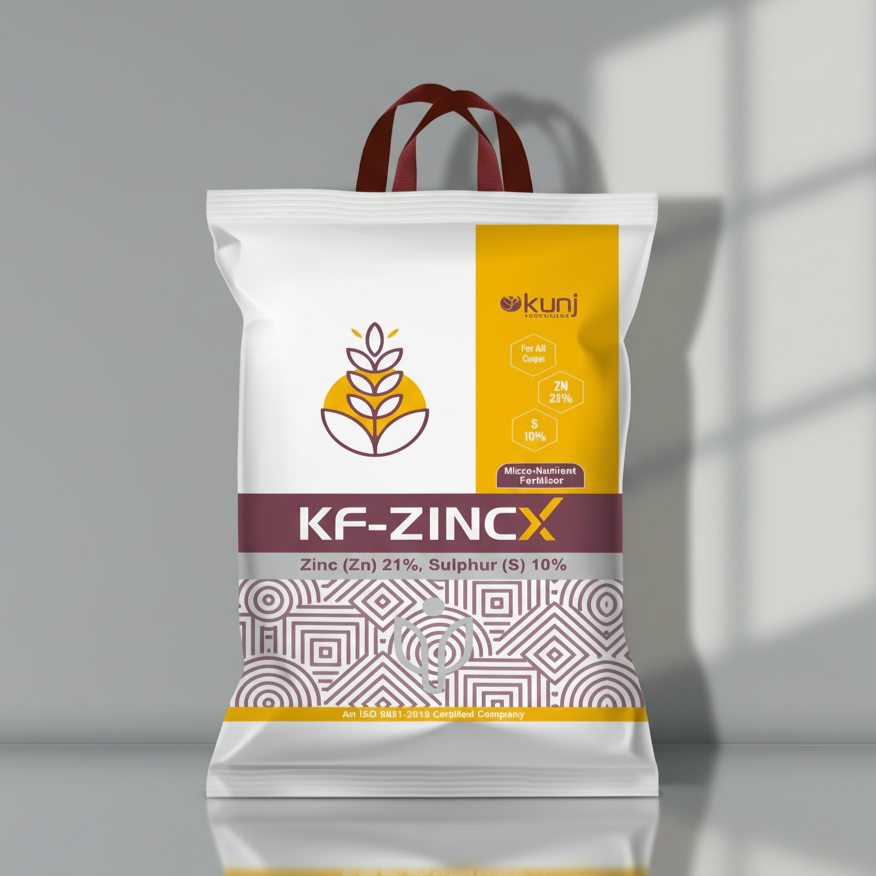
KF-Zincx
Zinc sulphate hepta hydrate
Available Packing:
1kg, 10kg
Zinc sulphate hepta hydrate:
Zinc Sulphate Heptahydrate (ZnSO₄·7H₂O) is one of the most common and widely used zinc fertilizers in agriculture and horticulture. It is a crystalline, water-soluble salt that serves as an efficient source of the essential micronutrient zinc (Zn). It is primarily used to prevent and correct zinc deficiency in a broad range of crops, which is a common nutritional disorder in many of the world's soils.
Mode of Action:
As a micronutrient fertilizer, Zinc Sulphate provides zinc in a form that is readily available for plant uptake. Zinc is a critical component for the normal growth and development of plants, playing a vital role in several key functions:
Enzyme Activation: Zinc is a crucial component or cofactor for hundreds of enzymes, including those involved in photosynthesis, carbohydrate metabolism, and protein synthesis.
Hormone Synthesis: It is essential for the synthesis of tryptophan, which is a precursor to auxin (indole-3-acetic acid), a key plant hormone that regulates growth and development, particularly cell elongation.
Protein Synthesis: Zinc is involved in the synthesis of proteins and the structural integrity of ribosomes.
Membrane Function: It plays a role in maintaining the integrity of cellular membranes.
When applied, the soluble zinc sulphate dissolves, allowing zinc ions (Zn²⁺) to be absorbed by the plant's roots or foliage. Once inside the plant, it is transported to growing points where it participates in these vital metabolic processes.
Primary Uses and Target Crops:
Zinc Sulphate is used to correct zinc deficiency, which is prevalent in alkaline, calcareous, sandy, and high-phosphorus soils.
Crops that are highly sensitive to zinc deficiency include:
Cereals: Maize (Corn), Rice, and Wheat
Fruit Crops: Citrus, Grapes, Peaches, and Apples
Legumes: Soybean and various beans
Vegetables: Potatoes, Onions, and Tomatoes
Other Field Crops: Cotton and Sugarcane
Application and Dosage:
Zinc Sulphate is versatile and can be applied through several methods.
Soil Application: This is a common method for providing a long-term supply of zinc. It can be applied during land preparation by broadcasting or banding. A general recommendation is 5 to 15 kg per hectare, depending on soil deficiency levels and crop needs.
Foliar Spray: This method provides a rapid correction of deficiency symptoms. A typical concentration is 2 to 5 grams of Zinc Sulphate Heptahhydrate per liter of water. It is often mixed with a neutralizing agent like slaked lime to prevent leaf scorching.
Fertigation: Due to its high solubility, it is well-suited for application through drip irrigation and sprinkler systems, delivering the nutrient directly to the root zone.
Seed Treatment: Coating seeds with a small amount of zinc sulphate can give seedlings a good start in deficient soils.
Symptoms of Zinc Deficiency:
Zinc is relatively immobile in the plant, so deficiency symptoms typically appear on the middle or younger leaves first.
Stunted Growth: A common symptom is a reduction in internode length, leading to a "rosetted" appearance where leaves are clustered together.
"Little Leaf" Symptom: The new leaves are often small, narrow, and malformed.
Interveinal Chlorosis: Yellowing of the leaf tissue between the green veins. In some crops like maize, this appears as broad white or yellowish bands on either side of the midrib.
Delayed Maturity: Flowering, fruiting, and overall crop maturity can be delayed.
Safety Precautions:
Personal Protective Equipment (PPE): It is recommended to wear gloves and eye protection to avoid irritation. A dust mask should be used when handling the powder to prevent inhalation.
Handling: Do not eat, drink, or smoke during application. Wash hands thoroughly with soap and water after use.
Phytotoxicity: Over-application, especially in foliar sprays, can be toxic to plants and cause leaf burn. Always follow recommended dosages.
Storage:
Store the product in its original, tightly sealed container in a cool, dry, and well-ventilated place. Keep it away from moisture, direct sunlight, food, animal feed, and out of the reach of children and pets.