
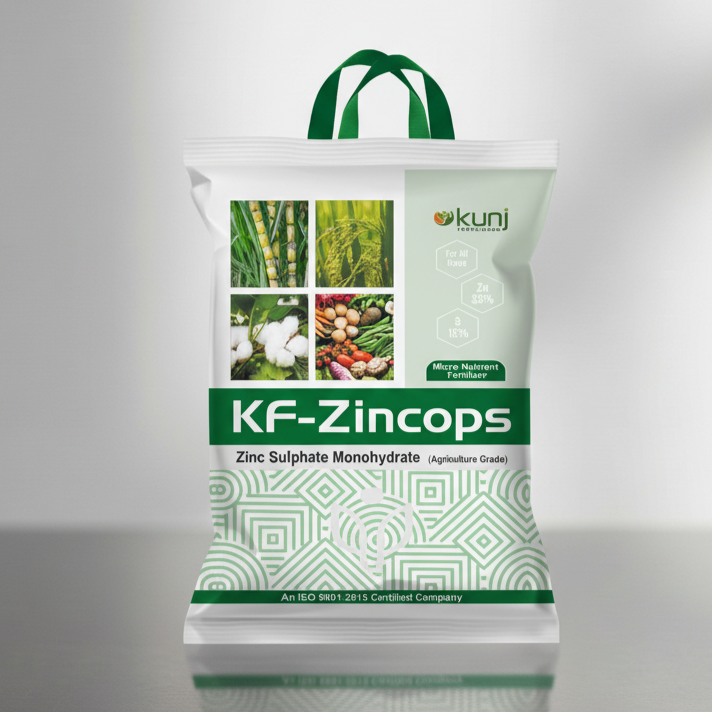
KF-Zincops
Zinc Sulphate Monohydrate (Agriculture Grade)
Available Packing:
1kg,10kg
Zinc Sulphate Monohydrate (Agriculture Grade):
Zinc Sulphate Monohydrate is a high-concentration micronutrient fertilizer containing 33% Zinc and approximately 15% Sulphur. Unlike Zinc Sulphate Heptahydrate (which contains 21% Zinc), this monohydrate form offers a higher percentage of zinc per kilogram, making it a more economical and efficient choice for correcting severe soil deficiencies. It typically comes as a free-flowing off-white powder or granule. It is essential for the production of growth hormones (Auxins) and plays a vital role in chlorophyll synthesis and carbohydrate metabolism.
Mode of Action:
Zinc Sulphate Monohydrate functions as a critical physiological activator:
Hormone Synthesis: Zinc is the key component required for the synthesis of Tryptophan, which converts to Indole Acetic Acid (IAA), the primary plant growth hormone responsible for stem elongation and leaf expansion.
Enzyme Catalyst: It activates various metabolic enzymes (like dehydrogenases and aldolases) that are crucial for photosynthesis, protein synthesis, and sugar formation.
Sulphur Supplement: The 15% Sulphur content aids in the synthesis of amino acids (Cysteine, Methionine) and improves the oil content in oilseed crops.
Primary Uses and Target Crops:
This product is primarily used for Soil Application to correct zinc deficiencies in a wide range of crops.
Key target crops include:
Cereals: Rice (Paddy), Maize, Wheat
Fruits: Citrus, Mango, Guava, Apple, Pomegranate
Vegetables: Tomato, Potato, Onion, Chili
Cash Crops: Sugarcane, Cotton
Oilseeds: Mustard, Soybean, Groundnut
Application and Dosage:
Zinc Sulphate Monohydrate (33%) is best applied to the soil as a basal dose or top dressing.
The recommended dosage is:
Soil Application (Basal/Top Dressing):
Rice (Paddy): Use 5 kg to 6 kg per acre. Apply during the last puddling or within 10–15 days of transplanting to prevent "Khaira" disease.
Maize/Wheat/Cotton: Use 5 kg to 6 kg per acre at the time of sowing or first irrigation.
Sugarcane: Use 8 kg to 10 kg per acre at the time of planting.
Fruit Trees: Use 100 to 200 grams per tree (depending on age) applied in the drip circle.
Method: Mix the required quantity with sand, urea, or organic manure and broadcast uniformly over the field.
Note: Because it is 33% concentration, the dosage is lower than the 21% Heptahydrate variety (which usually requires 10 kg/acre ).
Target Benefits / Deficiency Correction:
This product targets specific physiological disorders and growth issues.
Key benefits include:
Khaira Disease: The most effective remedy for Khaira disease (reddish-brown rusty spots) in Rice.
White Bud: Corrects White Bud deficiency in Maize.
Little Leaf: Cures Little Leaf (rosetting/small leaves) in Citrus, Mango, and Brinjal.
Growth Promotion: Eliminates stunted growth and shortened internodes.
Yield: Improves tillering in cereals and grain filling.
Leaf Health: Corrects interveinal chlorosis (yellowing between leaf veins).
Safety Precautions:
Strict adherence to safety precautions is essential to maintain nutrient balance.
Key safety recommendations include:
Phosphorus Antagonism (Critical): Do not mix Zinc Sulphate with Phosphatic fertilizers (like DAP, SSP, or NPK 12:61:0). Zinc and Phosphorus react to form insoluble Zinc Phosphate, which becomes unavailable to the plant. Maintain a gap of at least 4–5 days between Phosphorus and Zinc application.
Personal Protective Equipment (PPE): Wear gloves and a mask when handling the powder to avoid skin irritation or inhalation.
Handling Practices: Wash hands thoroughly after use. Do not eat, drink, or smoke while handling the product.
Overdosing: Do not exceed the recommended dose, as high zinc levels can induce iron deficiency.
Storage:
Store the product in its original container in a cool, dry, and well-ventilated place. The product is hygroscopic, so keep the bag tightly closed when not in use to prevent caking. Keep away from direct sunlight, moisture, food, and animal feed.