
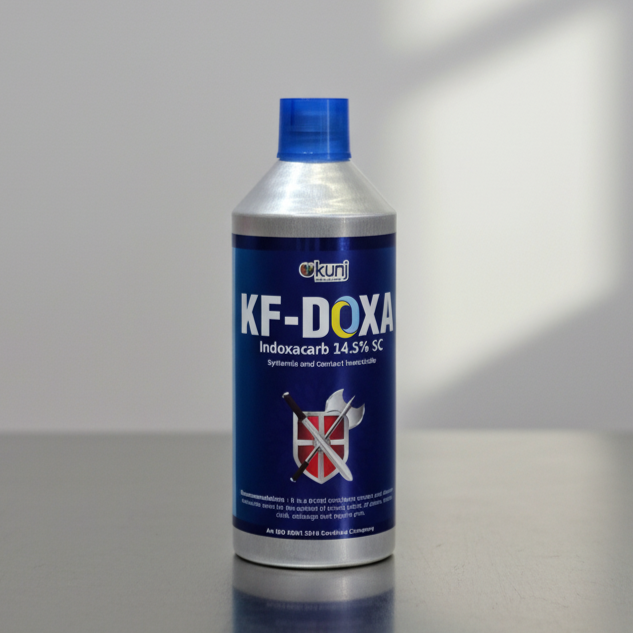
KF-Doxa
Indoxacarb 14.5% SC
Available Packing:
1ltr, 500ml, 250ml, 100ml
Indoxacarb 14.5% SC:
Indoxacarb 14.5% SC is a non-systemic, broad-spectrum insecticide with a Suspension Concentrate (SC) formulation. It belongs to the oxadiazine class of chemicals and is highly effective against a variety of lepidopteran larvae (caterpillars) and other chewing pests. It is valued for its unique mode of action, which makes it a useful tool in insecticide resistance management programs.
Mode of Action:
Indoxacarb 14.5% SC acts as a contact and stomach poison. Its primary mode of action is the blockage of sodium channels in the nervous system of targeted insects. This disrupts the flow of sodium ions into nerve cells, leading to impaired nerve function, paralysis, cessation of feeding, and ultimately, the death of the pest. Pests stop feeding within hours of exposure and typically die within 24-60 hours.
Primary Uses and Target Crops:
This insecticide is widely used to control chewing pests in a variety of agricultural crops.
Key target crops include:
Cotton
Cabbage
Tomato
Chilli
Pigeon Pea
Rice
Soybean
Various other vegetable crops
Application and Dosage:
Indoxacarb 14.5% SC is applied as a foliar spray. For best results, it should be applied when the first signs of larval infestation are observed.
The recommended dosage varies depending on the crop and the target pest:
Cotton: For bollworms, the dosage is around 200 ml per acre.
Cabbage: To control the Diamondback Moth, a dosage of 80-110 ml per acre is recommended.
Chilli: For fruit borers, the suggested dosage is 135-162 ml per acre.
Tomato: For fruit borers, 162-202 ml per acre is advised.
Pigeon Pea: To manage pod borers, a dosage of 135-162 ml per acre is recommended.
General Application: A common mixing rate is 1 ml per liter of water.
Target Pests:
This insecticide is highly effective against a broad spectrum of lepidopteran larvae and other chewing pests.
Commonly controlled pests include:
Bollworms (in cotton)
Diamondback Moth (in cabbage)
Fruit Borers (in tomato, chilli)
Pod Borers (in pigeon pea)
Yellow Stem Borer and Leaf Folder (in rice)
Tobacco Caterpillar (in soybean)
Cutworms
Safety Precautions:
As with all agrochemicals, proper handling and safety measures are essential.
Key safety recommendations include:
Personal Protective Equipment (PPE): Wear protective gloves, clothing, and eye/face protection.
Avoid Contact and Inhalation: Avoid contact with skin, eyes, and mouth. Do not inhale the spray mist.
Handling Practices: Do not eat, drink, or smoke while handling the product. Wash hands and contaminated clothing thoroughly after use.
Environmental Safety: Avoid release to the environment as the product can be toxic to aquatic life.
Storage:
Store the product in its original, tightly closed container in a cool, dry, and well-ventilated place. Keep it away from heat, ignition sources, food, animal feed, and out of the reach of children.
In case of poisoning, symptoms may include irritation to the eyes and skin, coughing, and blurred vision. It is crucial to seek medical attention immediately. There is no specific antidote; treatment is symptomatic.