
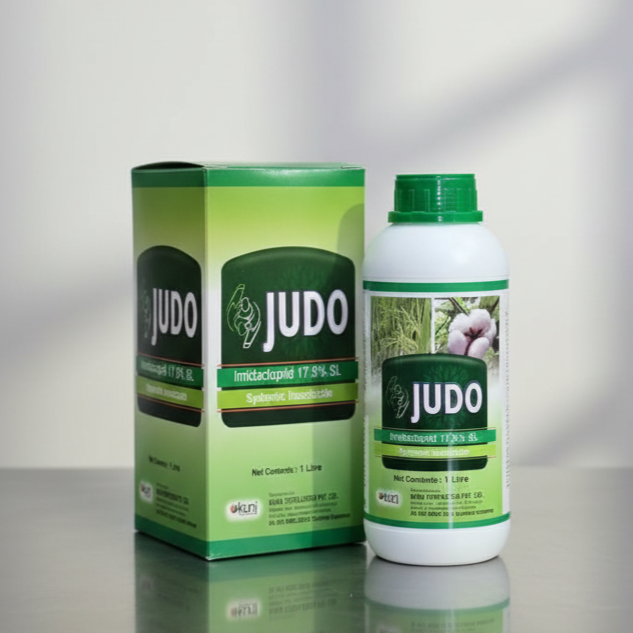
Judo
Imidacloprid 17.8% SL
Available Packing:
1ltr, 500ml, 250ml, 100ml, 50ml
Imidacloprid 17.8% SL:
Imidacloprid 17.8% SL is a highly effective, systemic insecticide belonging to the neonicotinoid chemical group, formulated as a Soluble Liquid (SL). It is widely used for the control of sucking pests, including termites, in a variety of crops. Known for its low application dose and long-lasting residual effect, it protects crops by moving systemically within the plant tissues. Additionally, it often exhibits a "phytotonic" effect, enhancing plant vigor, greenness, and stress tolerance.
Mode of Action:
Imidacloprid 17.8% SL functions primarily through systemic, contact, and stomach action.
Nerve Transmission Disruption: It acts as an antagonist to the nicotinic acetylcholine receptors (nAChR) in the insect's central nervous system.
Overstimulation: By binding to these receptors, it interferes with nerve impulse transmission, causing continuous excitation and overstimulation of the nervous system.
Systemic Defense: Upon application, the liquid is rapidly absorbed by the plant foliage or roots and translocated through the xylem, making the entire plant toxic to pests that feed on the sap. This leads to paralysis and the death of the pest.
Primary Uses and Target Crops:
This insecticide is a staple for managing sucking pests in fiber crops, cereals, vegetables, and fruits.
Key target crops include:
Fiber Crops: Cotton
Cereals: Rice (Paddy)
Vegetables: Chili, Okra (Bhindi), Tomato, Brinjal, Cucumber
Commercial Crops: Sugarcane, Sunflower, Groundnut
Fruits: Mango, Citrus, Grapes
Application and Dosage:
Imidacloprid 17.8% SL is mixed with water and applied as a foliar spray. It can also be used for soil drenching in specific cases (like termites).
The recommended dosage varies depending on the crop and pest pressure:
Cotton: To control Aphids, Jassids, Thrips, and Whiteflies, use 100 to 125 ml per acre.
Rice (Paddy): For Brown Plant Hopper (BPH), White Backed Plant Hopper (WBPH), and Green Leaf Hopper (GLH), use 100 ml per acre.
Chili & Vegetables: For sucking pests, use 100 to 125 ml per acre.
Sugarcane: To control Termites, use 350 ml per acre mixed with sufficient water and applied as a soil drench over the setts.
Mango: For Mango Hoppers, dissolve 2 to 4 ml per 10 liters of water and spray on the canopy.
General Mixing Rate: A common mixing rate for foliar spray is 0.5 ml to 1 ml per liter of water.
Target Pests:
This insecticide is highly specialized for the control of sap-sucking insects and termites.
Commonly controlled pests include:
Aphids
Jassids
Thrips
Whiteflies
Brown Plant Hopper (BPH)
White Backed Plant Hopper (WBPH)
Green Leaf Hopper (GLH)
Mango Hoppers
Termites
Flea Beetles
Safety Precautions:
Strict adherence to safety precautions is essential. Imidacloprid is highly toxic to honeybees.
Key safety recommendations include:
Personal Protective Equipment (PPE): Wear protective clothing, rubber gloves, boots, and a face mask/goggles during mixing and spraying.
Bee Safety: Do not apply during the flowering stage or when bees are actively foraging, as it is highly toxic to pollinators.
Handling Practices: Do not eat, drink, or smoke when using the product. Wash hands and exposed skin thoroughly with soap and water after use.
Environmental Safety: Do not contaminate water bodies, ponds, or irrigation ditches.
Storage:
Store the product in its original container in a cool, dry, and well-ventilated place, away from direct sunlight, moisture, food, and animal feed. Keep out of reach of children and uninformed persons.